
A plain GPS tracker knows where the vehicle is, how fast it is moving and whether the ignition wire is live. An FMB150 also has a CAN reader built in. Fitted to the vehicle's CAN bus, the network its engine and dashboard use to talk to each other, it can report what the engine itself is reporting: revolutions per minute, fuel in the tank, coolant temperature, the odometer, total engine hours.
The tracker sends these as numbered IO elements. Teltonika publishes what each number means for the FMB150, and GPStrix maps them to names and units, so the console shows "Engine speed 1,500 rpm" rather than io85=1500.
First, which readings you will actually get
What arrives depends on the vehicle, not just on the tracker. The CAN reader can only pass on what the vehicle's electronics put on the bus, and makes and models differ. A modern diesel truck usually reports engine speed and fuel level. An older light commercial vehicle may report engine speed and little else. Some report fuel as a percentage of the tank, some in litres, some both, and some not at all.
The tracker's own configuration matters too. Depending on how it is set up, a record may carry only the elements that changed since the last one. So the console shows each reading with the time it was last seen. A fuel level from an hour ago, shown as if it were current, is a wrong number.
| Reading | IO element | Unit as stored |
|---|---|---|
| Engine speed | 85 | rpm |
| Vehicle speed from the bus | 81 | km/h |
| Fuel level | 89 | % of tank |
| Fuel level | 84 | litres (sent in tenths of a litre) |
| Fuel consumed | 83 | litres (sent in tenths) |
| Total mileage from the bus | 87 | metres |
| Engine total hours | 102 | minutes |
| Coolant temperature | 115 | °C (sent in tenths, can be negative) |
Source: Teltonika's published FMB150 data sending parameters. The catalogue in GPStrix also covers throttle, torque, AdBlue, oil and air temperature, brake, parking brake, cruise control, PTO and door states.
Engine RPM: the reading that explains idling
Ignition on and speed zero tells you the vehicle is stopped with the key turned. It does not tell you whether the engine is running. RPM does. An engine turning at idle speed, with the vehicle stationary for forty minutes at a loading bay, is fuel being burnt for nothing, and it is the commonest thing a fleet finds in its first month of CAN data.
The second use is over-revving. Sustained high RPM on a loaded truck is hard on the engine and the clutch, and it usually means a driver holding a low gear on a climb or racing between stops. On a GPStrix replay you can choose a condition, such as engine speed above 2,500 rpm, and the route and the timeline are coloured wherever it was true. The number to use depends on the engine. A small petrol engine and a heavy diesel have very different normal ranges, so look at a week of a vehicle's own data before you pick one.
The third use is quieter. Engine hours from the bus, compared with the hours the ignition was on, show how much of the working day the engine actually ran. Service intervals for plant and generators are often set in engine hours, not kilometres.
Fuel level: useful, noisy, and not proof of theft on its own
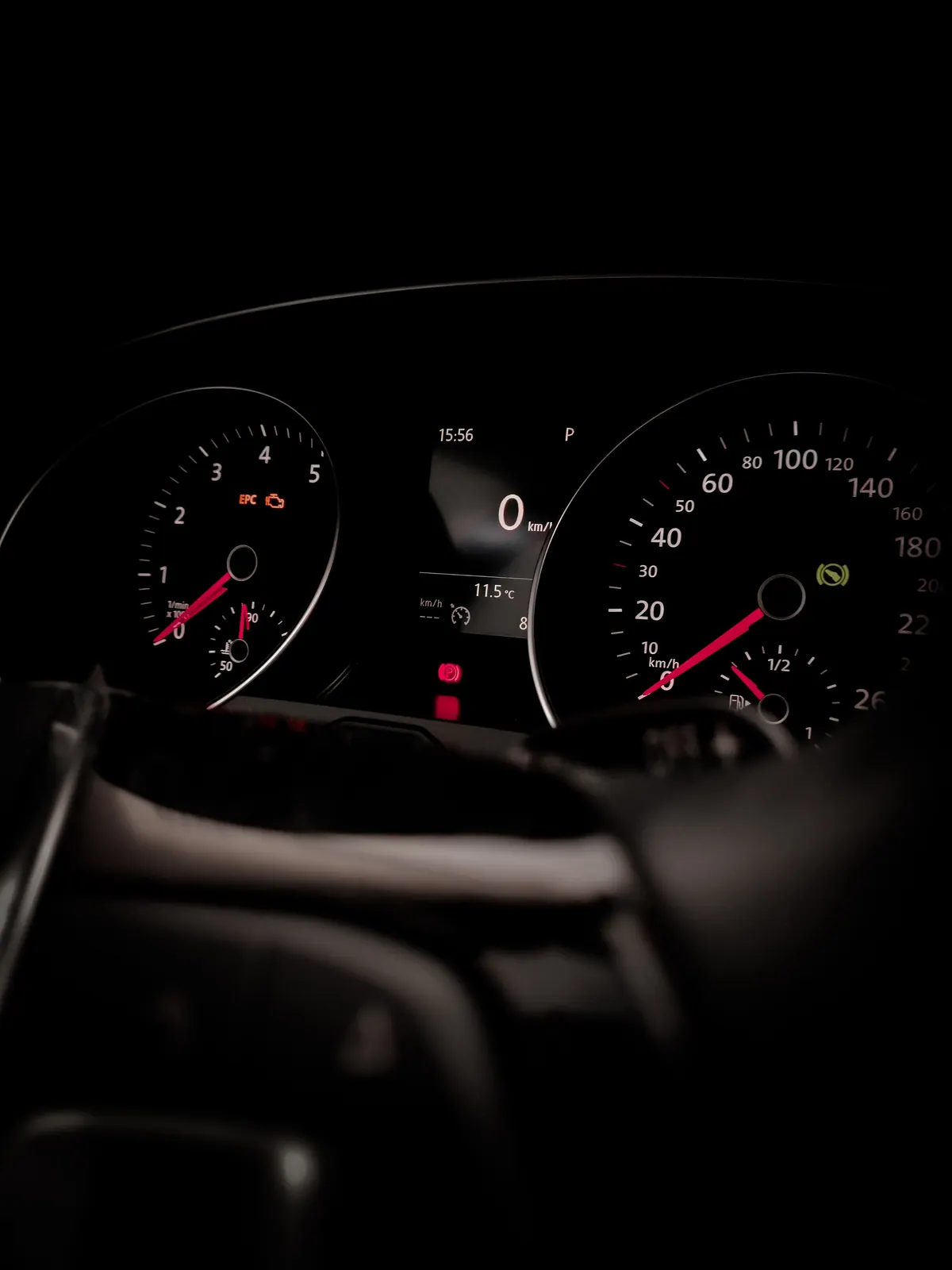
The fuel level on the bus comes from the same sender that drives the gauge on the dashboard: a float in the tank. Fuel moves. It sloshes when the vehicle brakes, sits at an angle on a slope, and settles after the engine stops. A raw reading can jump several per cent in either direction from one record to the next with no fuel added or taken.
So GPStrix never reads one record on its own. It smooths the level with a running median over the last few readings, and only then looks for change. The rules, in the order they are applied:
- A reading outside 0 to 100 per cent is the sender, not the fuel. It is recorded as a sensor fault.
- A drop that comes back, recovering at least half of what it lost within the same window, is a sensor fault. Fuel that has been siphoned does not come back.
- A drop while the vehicle was moving is recorded but never reported as a drain. Movement is exactly when the float is least reliable.
- Only a sustained change while stationary is reported, as a drain or a refuel depending on its sign.
By default the smoothing uses seven readings, and a change counts when the smoothed level moves by at least 10 percentage points within 15 minutes. Every reported event carries a confidence, and litres are only given when you have entered the vehicle's tank size. A guessed tank size would put an invented number of litres on what reads like an accusation against a named driver.
One trap catches almost everyone. Traccar, the tracking server underneath GPStrix, names element 84 fuel, and on a Teltonika that value is litres, not a percentage. Software that reads it as a percentage will chart 42 litres of diesel as a tank 42 per cent full. GPStrix reads the percentage only from element 89, and treats element 84 as litres.
Knowing when the CAN bus has gone quiet
A tracker whose CAN connection has been pulled keeps sending GPS. On the map it looks perfectly healthy. The only sign is that the engine data has stopped, and that is easy to miss, so GPStrix classifies every position into one of three states:
- CAN active
- The position carries CAN data, and the condition you chose (if any) is true.
- Connected, inactive
- CAN data is present, but the condition is not met, or the bus did not include that particular reading.
- Disconnected
- The position carries no CAN data at all.
Two rules stop this from crying wolf. A single record without CAN data is noise; it takes three in a row to count as a disconnect. And if the tracker sends nothing at all for more than 15 minutes, that gap is "no data", not a CAN disconnect. A vehicle that was simply switched off for the night should not send someone out to check a cable.
The CAN activity report and the replay use the same calculation, so a PDF and the map never disagree about when the bus dropped out. A disconnect followed by a reconnect a few minutes later is often a fitter at work. The same pattern every evening at the same depot is worth a conversation.
OBD is a different source
The FMB150 can also take readings from a Bluetooth OBD-II dongle plugged into the diagnostic port. Those arrive as different IO elements, and GPStrix shows them separately and labels them OBD. They can disagree with the CAN values, and neither one is automatically right. If both are fitted, decide which one you trust for each reading and use that one in your rules.
A short checklist for a new installation
- After fitting, drive the vehicle for ten minutes and open its CAN panel in the console. Note which readings actually appear.
- Set the device model to FMB150 in GPStrix, so the gateway uses Teltonika's names for the elements.
- Enter the tank size if you want litres in fuel reports.
- Look at a week of RPM for the vehicle before you write an over-revving rule.
- Add a rule on CAN disconnect for vehicles where tampering is a concern.
If a reading you expected is missing, the problem is usually the vehicle's bus or the tracker's configuration, not the software. Anything the tracker sends that GPStrix cannot name is still shown, under "raw", so you can see it arriving.